
When your child doesn’t want to practise
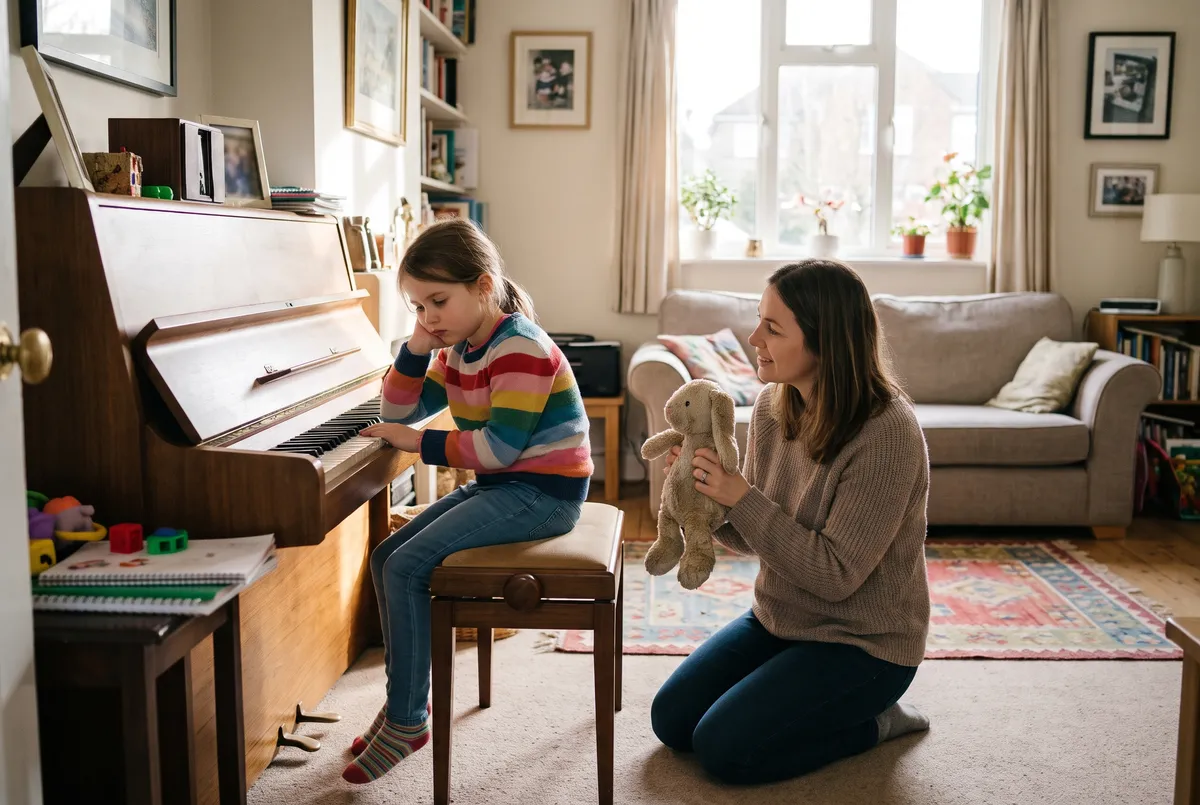
Every child goes through phases of not wanting to practise, and it’s completely normal. Usually the answer isn’t to push harder, but to make the step smaller and turn it into a game.
Keep it short and positive
If your child is reluctant, it is much better to have a short, pleasant practice than to argue and have things become unpleasant. For a while, try having them simply play their pieces with no corrections or suggestions at all. Give only positive comments. Keep practice very short too. Even playing just one piece is fine.
The main aim is to keep the routine of going to the instrument together every day, preferably at the same time and having a pleasant time there. It doesn’t matter if the session is very short. The daily habit is what carries you through these phases.
Make the step smaller
If your child can’t actually do the thing yet, they probably won’t tolerate repeating it for long. Make the task easier so they can repeat something they can do, and build up from there. There’s more about this in How to practise with a young child.
Try a running commentary
Sometimes children go through a phase where they can’t accept instruction of any kind from their parent. This can be hard! But sometimes they will accept a running commentary. Perhaps they will play for you as long as you don’t ask them to do anything, and perhaps you can get away with reflecting (a lot) on what they are doing. Perhaps you could bring a few fluffy toy “children” along to listen. Maybe the fluffy toys are also learning music, then you can chat to them about what you’re seeing and whether they find that aspect difficult as well. Perhaps they can learn something from watching your child play. This could all be done without actually “asking” your child to do anything.
Let them do it both ways
Sometimes a child will do something the “wrong” way just because they can’t do it the “right” way and they don’t want to admit it! Tell them that they can choose which way to do it in the piece (for now), but you would like them to show you that they CAN play it both ways.
Let your child be the teacher
Children who resist being taught are often delighted to be the teacher instead. Let your child teach you (or a fluffy toy) whatever they are learning.
If your child won’t watch you demonstrate
You don’t need to make your child watch you play. In Suzuki lessons, the recording is their main model, so let the recording do the work:
- Listen together. If they’re willing, listen to the recording again with them, then ask whether their playing sounded the same.
- Film the teacher. During a lesson, use your phone to film the laptop screen while the teacher plays a short section. Your child can watch it again at home.
- Ask for a lesson recording. Whole lesson recordings can be provided if you ask your teacher.
- Let a toy show them. Your child might happily copy a fluffy toy or hand puppet who “shows” them how something is done.
For a child who keeps wandering off
Write a secret note for them saying something nice like “I love spending time playing music with you”. Fold the note and get them to stand or sit on it while they practise. If they can keep it covered till the end of the practice, they can read the note. If they leave it uncovered, you can take it away and they will never know what it said!
Change the scene
A new place can make practice feel fresh. Violin children can play outside or in a different room, and even a digital piano might be able to be moved around. Do the whole practice somewhere new, or play one review piece in each place.
If your child drifts off during online lessons
Some children feel shyer on camera than in person, and it can take a while before they’re comfortable engaging with someone on a screen. This is normal, and it usually passes as they get to know their teacher. A few things can help:
- Sit close by. Having you right beside them helps a shy child feel safe.
- Make sure they can see and hear the teacher clearly. A bigger screen or better speaker can make a real difference.
- Give them something to share. Children often warm up when they can show their teacher something, like a favourite toy or a piece they’re proud of.
- Expect some wriggling. Short attention spans are part of being young. Your teacher can suggest ideas to help, such as quicker changes of activity or a short movement break.
If it’s happening often, mention it to your teacher so they can adjust the lesson to suit your child.
Talk to your teacher
If practice has become a battle, tell your teacher. Every family goes through this at some point, and adjusting the routine, the steps or the games is part of their job. You’ll find more game ideas on our Keeping practice fun page. And if you’d ever like to talk things over with someone else, you’re always welcome to get in touch with Katie.
Online Suzuki lessons
At Katie Suzuki Music, children from age 3 learn Suzuki piano or violin one-to-one by live webcam lessons with a registered Suzuki teacher. Book a free 30-minute intro chat.