
Violin · Getting ready
Getting ready for violin lessons
Here's what you'll need before your child's first lesson. There's quite a bit at the start, so contact Katie or your teacher if you have any questions. We're very happy to help.
Before the first lesson
Your role as a Suzuki parent
In Suzuki lessons the parent is part of the team. Please read this short guide to the Suzuki method and lessons (PDF), and/or watch Katie's parent course videos.
Enrolment form
Please complete the enrolment and parent consent form.
What size violin?
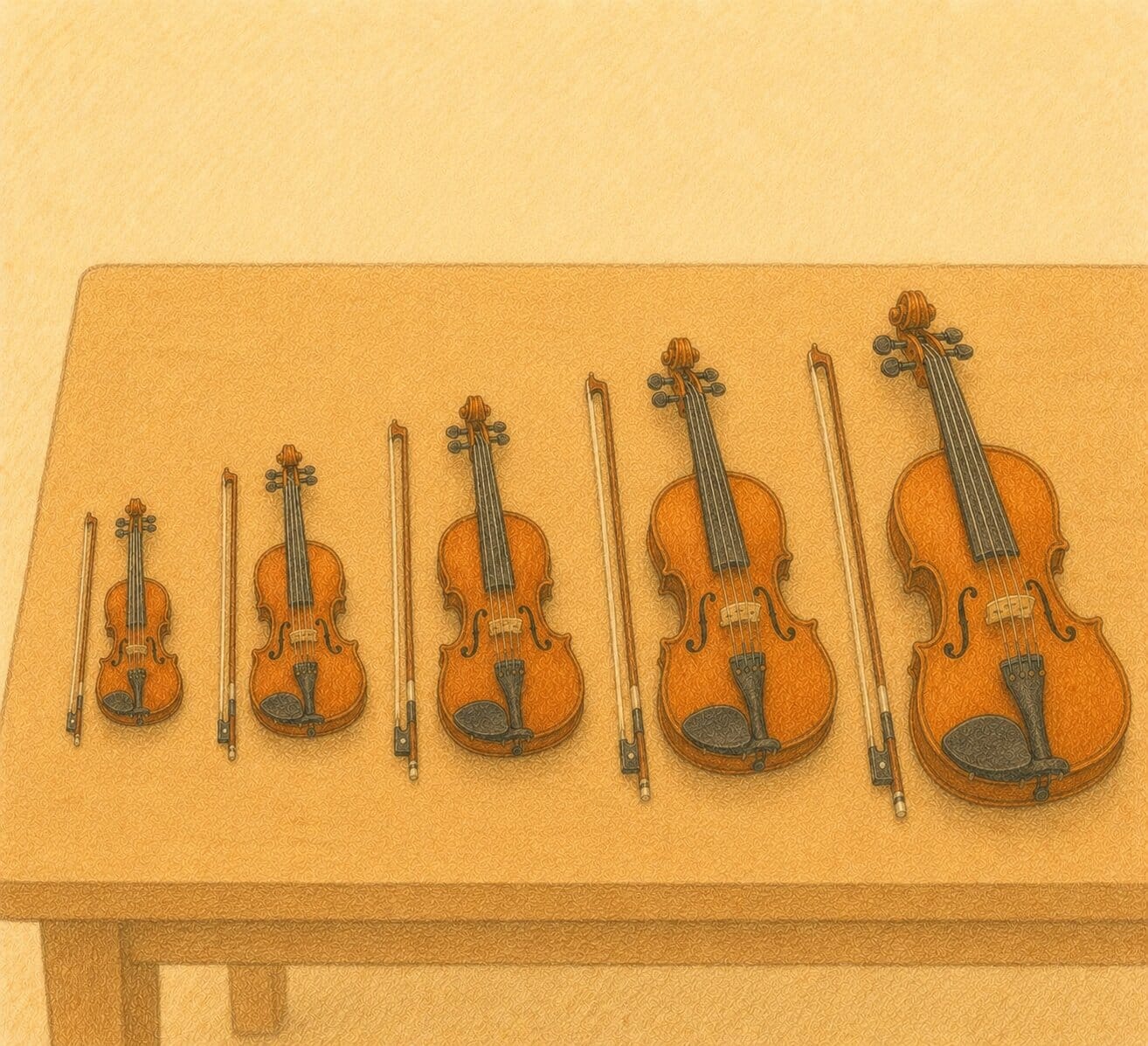
Violins come in about seven sizes. Adults play a "full size" violin, and children play one of the smaller sizes, moving up as they grow.
The easiest way to find the right size is to measure your child's arm, as shown in the video below. Please don't rely on a music shop for sizing: Suzuki teachers usually prefer a smaller violin than many shops suggest. If you've already bought one, just tell us the size and we'll check it together.

Arm length and violin size
Measure from the neck to the wrist, as shown in the video. Sizes vary a little between makers, so if you can, hold the actual violin against your child's arm: the full length of the violin, to the end of the scroll, should be about the same as the arm measurement or slightly shorter.
- 36 cm (15 in) or less: 1/32
- 37–39 cm (15–16.5 in): 1/16
- 40–42 cm (16.5–17.5 in): 1/10
- 43–45 cm (17.5–19.5 in): 1/8
- 46–49 cm (19.5–21 in): 1/4
- 50–53 cm (21–22 in): 1/2
- 54–58 cm (22–24.5 in): 3/4
- 59 cm (24.5 in) or more: full size
Between sizes? If you can hire, choose the smaller size for now; if you're buying, the larger size usually lasts longer. Ask Katie or your teacher if you're unsure.
Buying or hiring a violin
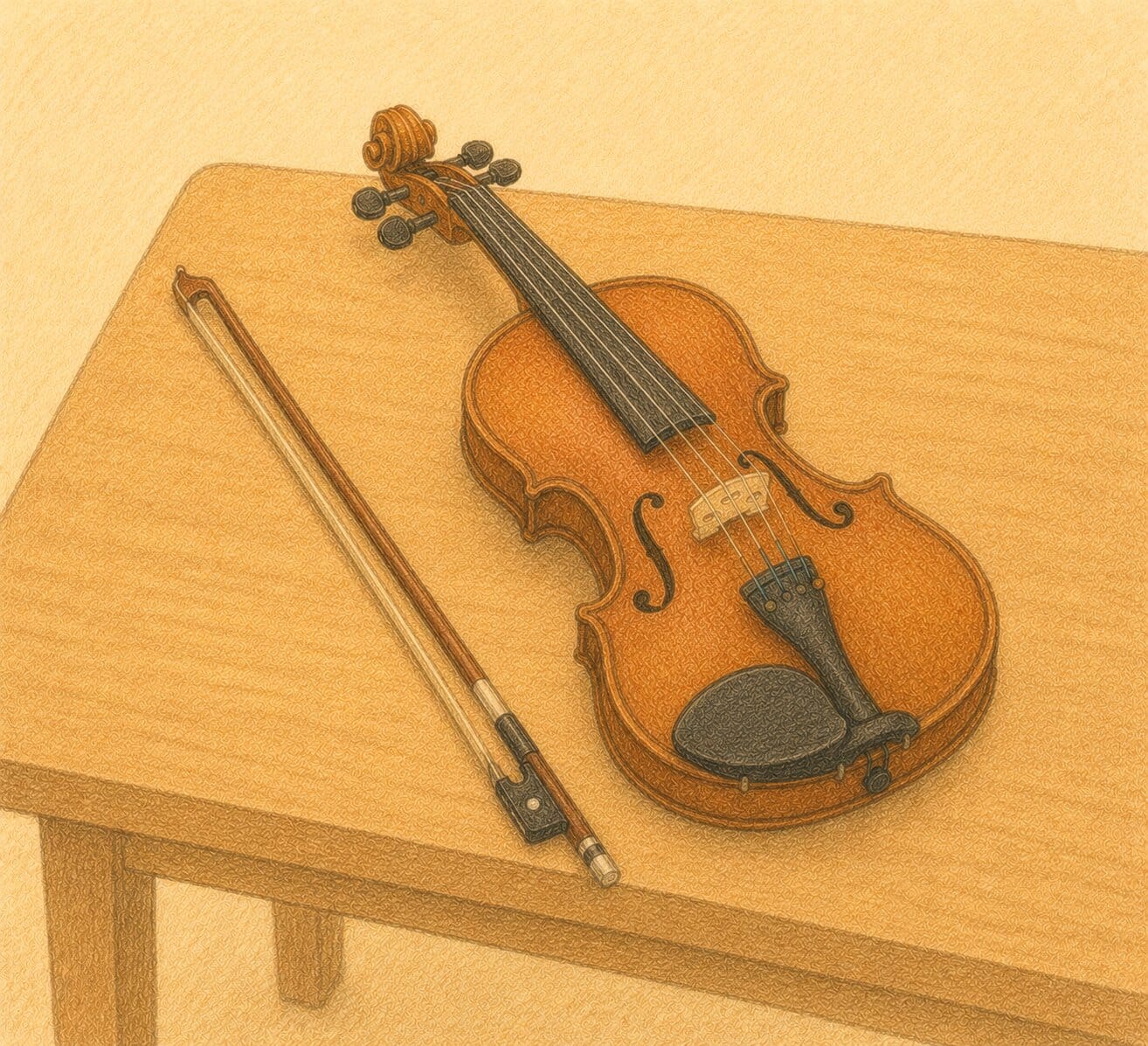
A new student violin usually comes as a kit: violin, bow, case and rosin. You'll need all of these. It should also have fine tuners on the strings; if not, ask for them to be fitted before you start.
A good second-hand violin can be fine, but it's hard to judge quality at first. Check there are no cracks, that the screw at the end of the bow turns smoothly, and that the bow still curves inwards when the hair is loose. Buying new gives more peace of mind. Hiring is worth considering too, because it makes moving up through the sizes easier.
Buy the best sound you can afford
You'll hear this violin every day, and your child will be trying to match the lovely tone on the Suzuki recordings. Cheap violins tend to sound thin and scratchy, and often need repairs early on. A better-sounding violin is more enjoyable to play, which helps children want to keep going. The good news is that you can upgrade a little each time your child moves up a size.
Where to buy
In the USA, Shar Music sells beginner violins (we haven't tried them ourselves). Elsewhere, a specialist string shop is usually a better choice than a general music store.
Buying a violin in New Zealand
The easiest "order online and it arrives at your door" option is the Endeavour "Optimist" violin from the String Workshop. It isn't the cheapest, but it's the most affordable violin we've found that works reliably. Their "Journeyman" model is a good step up.
If you can spend more, we highly recommend Antonio Strings; their AS10 model comes in all sizes. Some music shops also hire out violins.
Not sure about a violin? Ask your teacher or Katie before you buy.
Shoulder rest or foam
Very small violins (1/32, 1/16 and 1/10) just need a foam. It can be a shaped foam, a foam offcut or even a kitchen sponge.
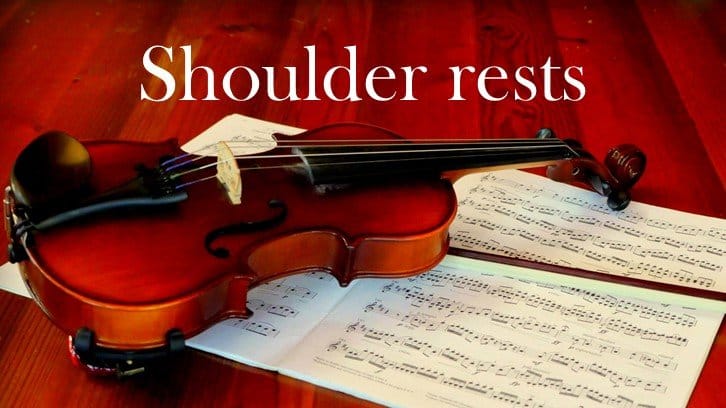
From size 1/8 up, use a shoulder rest. We like the Viva La Musica Flex for sizes 1/8 to 1/2, and Kun shoulder rests for 1/2, 3/4 and full size. A good shoulder rest stays on the violin and suits your child's neck and shoulder; some fold flat or adjust to the next size up.
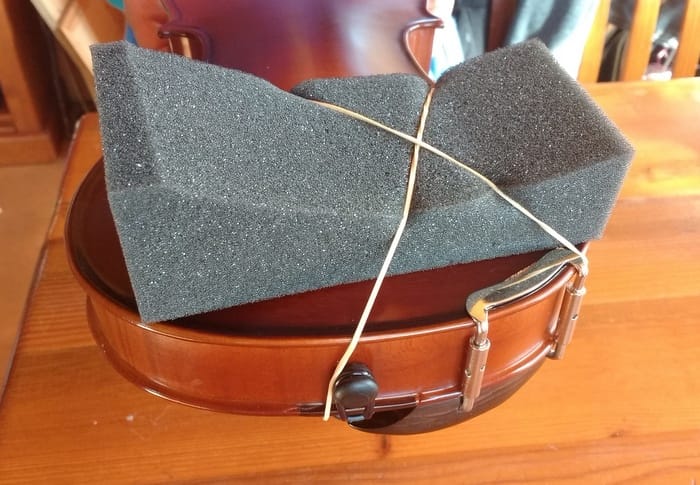
This short video shows how to set up the foam or shoulder rest:
Rosin and pinky-hold
Rosin
Rosin goes on the bow hair so it grips the string and makes a good sound. It needs putting on fairly often. A new violin usually comes with rosin; if not, please buy some.
Pinky-hold (optional)
A small rubber pinky-hold pushes onto the end of the bow and helps your child keep their little finger curved and on top of the bow. It's optional but often helpful. Choose a small one just for the little finger, not the larger kind that shapes the whole hand. You can usually find them on Amazon or at Shar Music.
A laptop or tablet for lessons
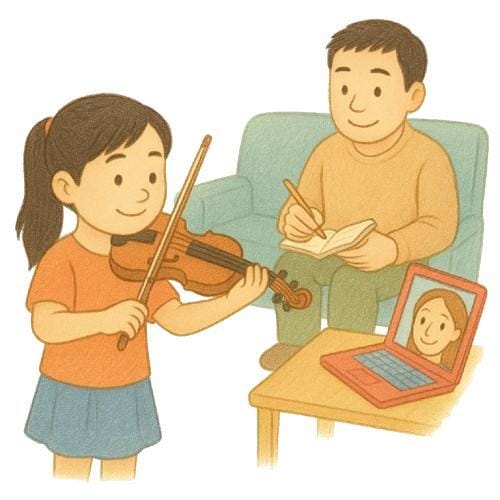
A laptop works best: children concentrate better when the teacher's picture is bigger. A tablet, or even a phone, can work too. Another option for violin is to show the teacher's picture on your TV.
Place it so the teacher can see your child's head and body, including the bow arm. A cable (ethernet) connection is the most reliable, but most families use wifi and it usually works fine.
The Suzuki book and recordings
You'll need Suzuki Violin School, Volume 1. The International Edition is the newest, but the Revised Edition is fine too. The book comes in several languages, so check yours has English words.
You'll also need the recordings of the Volume 1 pieces; the latest is played by Hilary Hahn. Your child listens to them every day, so please buy the tracks.
- The book from Alfred or Amazon
- The recordings from Apple Music (iTunes), Alfred or Amazon
Because of Suzuki copyright agreements, not every link works in every country. If you have trouble buying anything, contact Katie and she'll help.

Practice sheets and a folder
Print a few weekly practice sheets (PDF), and keep your child's violin papers together in a folder. A slim ring binder works well.
Questions?
There's quite a bit to prepare at the start. Contact Katie or your teacher with any questions; we're very happy to help.